
Introduction
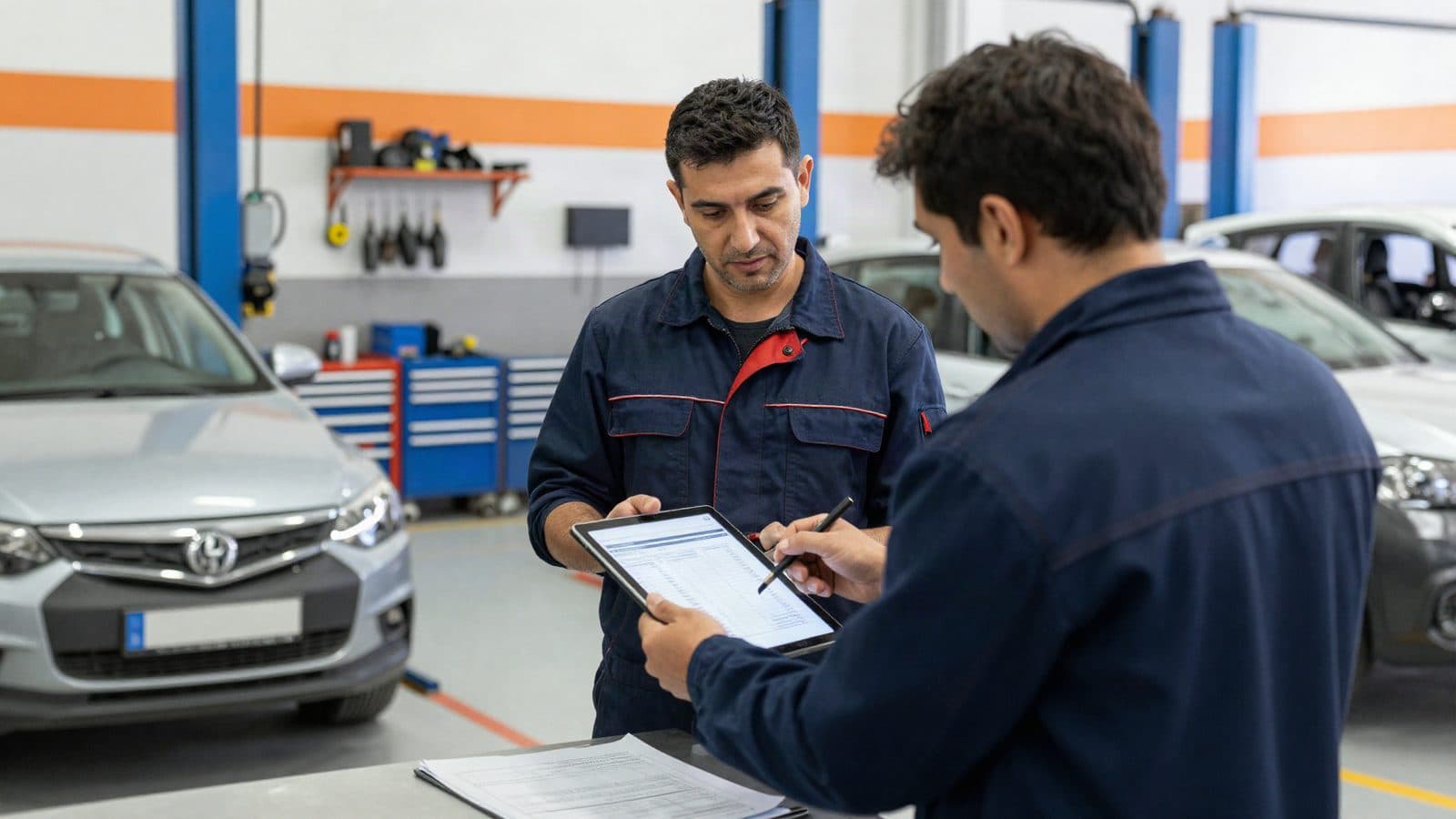
One of the most difficult questions in an auto service business is: "How much work does each technician complete?" In many workshops, the answer relies on the foreman's observations, scattered notes, or end-of-day estimates. The right auto repair software, however, turns this answer from a guess into measurable data. When service records, work orders, and labor statuses are collected in a single workflow, technician efficiency becomes something that is measured rather than merely perceived.
Manifolt is a business management software solution designed for vehicle maintenance and repair businesses, with the goal of establishing this consistent data foundation. In this article, we explain which data you should use when reviewing service performance reports, how to interpret technician efficiency, and how to incorporate this measurement into daily operations.
Key Takeaways
- Technician efficiency can only be measured reliably when work order and labor data are recorded consistently.
- Manifolt brings service records, labor statuses, and delivery processes together in a single workflow, providing a consistent foundation for performance reporting.
- Performance measurement requires reviewing multiple indicators, such as work order volume, process flow, and delivery timing, rather than relying on a single figure.
- Thanks to its mobile-friendly structure, data can be recorded on-site while the work is being performed, helping reports reflect actual operations more accurately.
- Accurate measurement should be used not to penalize technicians, but to distribute workloads fairly and identify process bottlenecks.
The Data Foundation for Measuring Service Performance
A performance report is only meaningful when the underlying data is organized. For this reason, accurate recordkeeping comes before measurement.
Measurement starts with the work order
Every repair begins with a work order and ends with vehicle delivery. In Manifolt, vehicle intake, service, and delivery processes are tracked within a single workflow, so every step from a vehicle's arrival at the workshop to its departure remains recorded. These records answer questions such as "Which technician was assigned to which job, what stage is the labor process at, and is the job waiting for a parts order?" For a manager who wants to measure technician efficiency, this work order data is the starting point.
Which data should you review?
Relying on a single "efficiency score" can be misleading. It is more effective to evaluate several indicators together:
- Work order volume: The number of work orders a technician takes on and completes within a specific period.
- Labor status: The distribution of jobs that are in progress, completed, or on hold while waiting for parts.
- Process flow: How quickly each stage progresses from intake to delivery.
- Delivery timing: The consistency between the promised delivery time and the actual delivery time.
When these indicators are reviewed together, you can distinguish between a technician who handles a high volume of work but frequently misses delivery deadlines and one who handles fewer jobs but delivers consistently.
Collecting data at the source
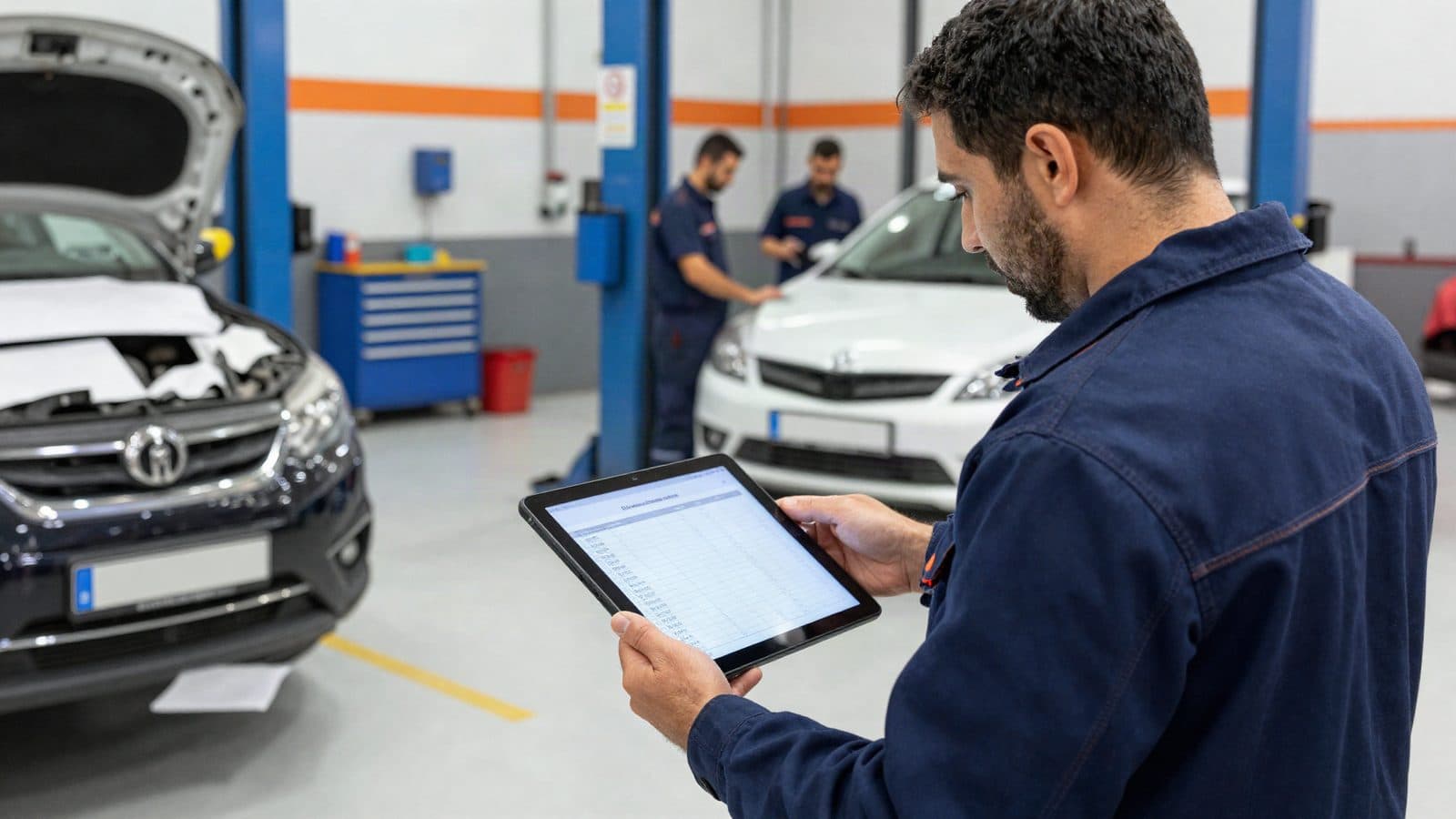
A report is only accurate when the data reflects reality. Manifolt's vehicle registration document and license plate scanning feature, powered by a phone camera, makes vehicle records faster and more consistent, ensuring that each job is linked to the correct vehicle from the very beginning. Thanks to its mobile-friendly structure, technicians or service advisors can record updates on-site without returning to a desk. Data entered while the work is taking place makes performance reports significantly more reliable than information entered later from memory.
Turning Reports into Technician Efficiency Insights
Collecting data is only half the process; the real value comes from turning that data into management decisions.
Interpret the numbers in context
Consider an example in which one of two technicians closes more work orders per month than the other. On its own, this figure does not tell the whole story. The technician closing fewer jobs may primarily be handling long-running jobs or jobs that are waiting for parts. The labor status and parts order tracking provided by auto repair software allow you to see this context. As a result, performance evaluations focus on the process rather than the individual and create a fairer environment for the team.
Balance the workload
Performance reports do more than describe the past; they also help you distribute future workloads. When you can see who is fully booked, who is available, and which jobs are stuck at a bottleneck, you can assign newly arrived vehicles more evenly. This can make delivery times more predictable while preventing individual technicians from becoming overloaded.
Efficiency becomes meaningful when combined with payment collection
Service operations are not limited to labor alone. Because Manifolt keeps service records, customer information, and payment collections within the same workflow, you can also track whether completed work has resulted in payment. High labor performance creates value for the business only when the completed work is invoiced and collected. This comprehensive view allows you to evaluate efficiency not only by asking "How many jobs were completed?" but also "What was the outcome of the completed work?"
Quick checklist
Review the following points when setting up your performance reports:
- [ ] Is every work order assigned to the correct technician and vehicle?
- [ ] Are labor statuses kept up to date (in progress / on hold / completed)?
- [ ] Are jobs waiting for parts displayed separately?
- [ ] Are delivery times recorded?
- [ ] Is the payment status of completed work being tracked?
Frequently Asked Questions
Can I measure technician efficiency without auto repair software?
You can, but the results are generally unreliable because the data remains scattered. Handwritten notes and end-of-day estimates do not provide a consistent basis for comparison. Auto repair software such as Manifolt collects work order and labor data in a single workflow, making the measurement process more consistent and less dependent on guesswork.
Which data does Manifolt use for performance reporting?
Manifolt brings together service records, work order and labor statuses, parts order tracking, vehicle intake and delivery processes, and payment collection workflows in one place. These records provide the core data required to evaluate technician efficiency across multiple indicators.
Can performance measurement become a source of pressure for technicians?
Not when it is used correctly. The goal is not to compare individuals unfairly, but to distribute workloads evenly and identify process bottlenecks. For example, a technician handling long-running jobs that are waiting for parts may carry a critical workload despite completing fewer jobs. A performance report reviewed in context makes this contribution visible.
Conclusion
Technician efficiency is one of the most valuable yet most difficult resources to measure in a workshop. Making it visible requires bringing work order, labor, and delivery data together in a single workflow instead of leaving it scattered across different records. Once auto repair software establishes this foundation, performance reports become more than documents that summarize the past. They become management tools that help balance workloads and secure payment collection. The key is to interpret the numbers in context and focus on improving the process rather than judging the individual.
More from this author
One Digital File for Every Vehicle: Manifolt as Easy-to-Use Auto Repair Software
Müşteri bilgisi, plaka ve araç geçmişini tek yerde tutan, kullanımı kolay bir oto tamir programı mı arıyorsunuz? Seçim kriterlerini ve Manifolt'u inceleyin.
Auto Repair Software Options in Turkey: Manifolt for Plate Registration, Vehicle History and Maintenance Tracking
Türkiye'de oto tamir programı mı arıyorsunuz? Plaka taramalı araç kaydı, araç geçmişi, bakım takibi ve tahsilat için seçenekleri ve Manifolt'u inceleyin.

Recognize a Returning Vehicle at First Glance: A Guide to Choosing Easy-to-Use Auto Repair Software, and Manifolt
Müşteri, plaka ve araç geçmişini kaydeden, önceki işlemleri gösteren kullanımı kolay oto tamir programı mı arıyorsunuz? Seçim kriterleri ve Manifolt rehberi.

From Ledger to Cloud: Auto Repair Software Options for Auto Service Shops in Türkiye, and Manifolt
Türkiye'de oto tamir programı mı arıyorsunuz? Müşteri, plaka, araç geçmişi kaydı ve bakım takibi için seçenekleri ve Manifolt'un sunduklarını inceleyin.

Customer, Plate and Vehicle History in One Place: A Service Record Guide with Manifolt Auto Repair Software
Manifolt oto tamir programı ile müşteri, plaka ve araç geçmişini tek akışta kaydedin; önceki işlemleri görün, servis ve tahsilat süreçlerini mobilden yönetin.